top of page

What Is the Top Grape Seed Powder for Global Buyers?

What is the top Grape Seed Powder for global buyers? The answer depends on application, compliance, and verifiable quality—not price alone. Global grape production creates a substantial source of seeds for functional ingredients. FAOSTAT reports that grapes remain one of the world’s major fruit crops, while the International Organisation of Vine and Wine (OIV) regularly documents the scale of global grape and wine production. This supports a strong supply base, but it does not guarantee consistent powder quality.

Market research from Grand View Research and similar industry reports indicates continued interest in grape seed extracts and polyphenol-based ingredients. However, powder and extract are not identical products. Buyers should examine proanthocyanidin content, moisture, particle size, microbiological results, pesticide residues, and heavy-metal limits. A reliable supplier should provide a current certificate of analysis, batch number, origin details, and traceability from seed collection to packaging.

Small details matter. A sealed 25-kilogram bag should show clear labeling, production dates, storage conditions, and allergen information. The powder should have a stable color, clean aroma, and no visible foreign particles. Third-party laboratory testing adds credibility, especially for cross-border procurement.

There is no permanent winner.

The “top” product may differ for supplements, beverages, cosmetics, or animal nutrition. A low-cost quotation can appear attractive, yet weaker testing may create hidden risks. Buyers should also question unclear claims, inconsistent specifications, and unusually high active-content promises. Industry reports offer useful market direction, but supplier verification remains essential. Sometimes, the most professional decision is to reject a promising sample until the evidence is complete.
What Is the Top Grape Seed Powder for Global Buyers?

What Is Grape Seed Powder and How Is It Used?

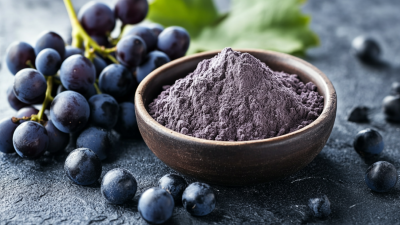
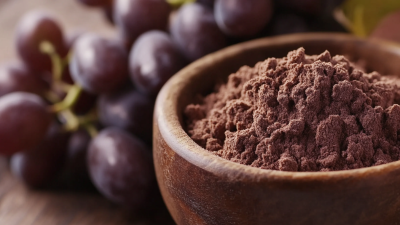
Grape seed powder is made by drying and finely milling grape seeds left after juice or wine production. It is not the same as grape seed extract. Powder keeps more of the seed’s natural structure, including fiber, oils, polyphenols, and proanthocyanidins. Its color may range from beige to deep brown. The flavor is usually bitter and slightly astringent.

People use grape seed powder in smoothies, yogurt, cereal, protein bars, and bakery recipes. A small amount can add a darker color and a dry, tannic taste. It may also appear in food formulations, personal-care products, or botanical blends, depending on local rules. It is not a magic ingredient. Processing conditions can change its flavor, texture, and nutritional profile.

For global buyers, practical inspection matters more than attractive descriptions. I would request the botanical name, country of origin, production method, mesh size, moisture level, microbiological results, pesticide testing, and heavy-metal analysis. A current certificate of analysis supports reliable purchasing. Packaging should protect the powder from heat, light, and humidity. Check labeling and permitted uses in the destination market. One detail is easy to miss: grape seed powder can absorb moisture quickly after opening. I would test a sample in the intended recipe before approving a larger shipment. The powder may look consistent, yet perform differently in a dense dough. That small surprise is worth investigating.

Which Quality Factors Define the Best Grape Seed Powder?

The best grape seed powder is defined by evidence, not a dark color or a strong bitter taste. A procurement team should request the botanical name, extraction ratio, origin, harvest date, and processing method. USDA FoodData Central provides basic nutrient references, but it does not replace a product-specific certificate of analysis. This distinction matters.

Proanthocyanidin content should be tested with a validated method, preferably by an ISO/IEC 17025-accredited laboratory. Results should state the analytical method, units, and testing date. A 2023 review in Antioxidants reported substantial variation in grape seed polyphenol levels across cultivars and extraction processes. Therefore, “high antioxidant” is not a sufficient specification. Ask for a numeric result. Also check moisture, ash, microbial counts, heavy metals, pesticides, and residual solvents. These details expose poor drying or weak supply controls.

Traceability is equally important. The supplier should connect each lot to farm records, production dates, and sealed samples. The USP Food Fraud Mitigation Database identifies economically motivated substitution as a continuing risk for botanical ingredients. That risk deserves attention. However, one laboratory report cannot prove everything. Testing may miss uneven distribution inside a batch, and certificates can become outdated. Independent retesting before shipment is a practical safeguard. The powder should smell clean, flow without hard lumps, and show consistent color between lots. Appearance helps, but it remains only supporting evidence.

What Is the Top Grape Seed Powder for Global Buyers?

Quality Factors That Define the Best Grape Seed Powder

How to read the chart: The ranges show representative composition levels commonly reported for grape seed powder on a dry-weight basis. Actual specifications vary by grape variety, growing region, processing method, and laboratory test method.

For global buyers, a strong product profile generally combines low moisture for storage stability, consistent protein and oil content, high dietary fiber, and meaningful total phenolic content. Buyers should also verify pesticide residues, heavy metals, microbiological safety, particle size, traceability, and a current certificate of analysis.

Reference basis: representative ranges reported in food-composition and grape-seed research literature; values are indicative rather than a supplier specification.

How Should Global Buyers Compare Grape Seed Powder Suppliers?

What Is the Top Grape Seed Powder for Global Buyers?

Global buyers should compare evidence, not attractive product claims. The OIV State of the World Vine and Wine Sector 2023 reported global wine production at about 237 million hectolitres. This indicates a large grape-processing base, but it does not guarantee consistent seed powder quality. Harvest conditions, drying temperature, and extraction practices can change color, odor, moisture, and polyphenol levels.

Ask suppliers for a batch-specific certificate of analysis. Check proanthocyanidin or total polyphenol results, moisture, ash, particle size, microbiology, pesticide residues, and heavy metals. Independent laboratory testing adds credibility. Methods should be clearly identified, preferably through validated HPLC or recognized AOAC procedures. ISO 22000 certification can support food-safety controls, but certification alone is not proof of every batch.

Tips: Request three recent COAs, not one sample. Compare test dates, laboratory names, methods, and specification limits. Confirm whether the powder is food-grade and whether the supplier can provide traceability from vineyard to packed lot. The FAOSTAT database can help buyers compare declared grape production across origin countries. Still, production volume is only a screening tool. I would also inspect packaging: sealed liners, lot codes, storage temperature, and an actual retained sample. Some suppliers provide excellent paperwork but weak communication after payment. That risk is easy to underestimate.

What Is the Top Grape Seed Powder for Global Buyers? - How Should Global Buyers Compare Grape Seed Powder Suppliers?

Practical comparison benchmarks for evaluating grape seed powder quality, compliance, consistency, and supplier capability

Comparison Dimension Recommended Benchmark Why It Matters to Global Buyers Documents or Tests to Request
Product Definition Clearly identified as grape seed powder, grape seed flour, or grape seed extract; the product form should not be confused with standardized polyphenol extract. Powder and extract have different compositions, applications, labeling requirements, and pricing structures. Technical data sheet, product specification, ingredient statement, and product photographs.
Raw Material Source Traceable grape seeds recovered from food-grade winemaking or juice-processing streams, with documented country or region of origin. Source affects variety, polyphenol profile, color, flavor, agricultural residue risk, and supply continuity. Traceability statement, batch records, agricultural information, and raw-material acceptance procedure.
Processing Method Controlled drying, milling, and sieving; processing should minimize excessive heat, oxidation, foreign matter, and cross-contamination. Poor processing can reduce quality consistency and create undesirable odor, color, moisture, or microbial results. Process flow chart, HACCP plan, allergen-control procedure, and foreign-material-control records.
Polyphenol or OPC Content For ordinary grape seed powder, verify the actual analytical value rather than assuming extract-level potency. If a standardized product is required, agree on a declared minimum and validated test method before ordering. “Grape seed powder” does not automatically have the same active-compound concentration as grape seed extract. Batch-specific certificate of analysis, method description, reference standard, and laboratory accreditation status.
Moisture Common commercial specifications are generally around ≤5–8%, subject to the product formulation and agreed specification. Lower and controlled moisture generally improves storage stability and reduces the risk of microbial growth or caking. Moisture test result for each production batch and the stated analytical method.
Particle Size A defined sieve range, such as 80–200 mesh or another application-specific range, with a tolerance agreed in the purchase specification. Particle size influences dispersion, mouthfeel, flowability, extraction efficiency, and processing performance. Sieve analysis, particle-size distribution, and retained-sample results.
Microbiological Safety Results should meet the destination market’s requirements for total plate count, yeast and mold, coliforms, Salmonella, and other specified organisms. Microbiological limits vary by intended use and jurisdiction, particularly for food, beverage, and supplement applications. Recent microbiological certificate of analysis from a qualified laboratory.
Pesticide Residues Testing should cover the pesticide panel required by the destination country and the intended application. Grape-related agricultural residues may be regulated differently across markets, and buyer-specific panels may be necessary. Multi-residue pesticide report, laboratory method, detection limits, and compliance statement.
Heavy Metals Lead, arsenic, cadmium, and mercury should be tested against the legal limits applicable to the destination market. Limits differ by country, product category, serving size, and intended consumer group. Batch-specific heavy-metal report using a recognized instrumental method such as ICP-MS or an equivalent validated method.
Mycotoxins Risk-based testing for relevant mycotoxins, especially when raw material storage conditions or regional regulations require it. Improper drying or storage can increase contamination risk in plant-based powders. Mycotoxin analysis, storage records, and preventive-control documentation.
Sensory Characteristics Uniform reddish-brown to dark-brown powder, characteristic grape-seed aroma, and no rancid, moldy, solvent-like, or abnormal odor. Sensory defects can affect finished food, beverage, cosmetic, or supplement products. Approved reference sample, sensory specification, and retained-sample comparison procedure.
Food-Safety System A documented food-safety management system, such as HACCP or an equivalent recognized system, with effective corrective-action procedures. Certification alone is not enough; buyers should confirm that controls apply to the actual production site and product. Valid certificate, audit summary, scope of certification, and recent third-party audit report where available.
GMO and Allergen Status Status should be clearly declared, with cross-contact controls appropriate for the facility and destination market. Importers and finished-product manufacturers may have specific declaration and segregation requirements. GMO statement, allergen declaration, sanitation procedure, and segregation controls.
Packaging and Shelf Life Food-grade, sealed, moisture-resistant packaging with batch number, production date, expiry or best-before date, and storage conditions. Powdered botanical materials can absorb moisture and oxidize if exposed to heat, light, or air. Packaging specification, stability or shelf-life data, label artwork, and storage instructions.
Batch Consistency Key parameters such as moisture, particle size, color, odor, microbiology, and declared active compounds should remain within agreed limits across batches. Consistent input quality reduces reformulation, customer complaints, and production interruptions. At least three recent batch certificates, control charts, and a written change-notification policy.
Sample and Pilot Order Supplier should provide a representative sample and support a pilot order before full-scale purchasing. Laboratory compliance does not always predict performance in a buyer’s formulation or process. Sample label, sample COA, pilot-order terms, and comparison against the approved reference sample.
Export and Regulatory Support Supplier should understand the buyer’s destination-country requirements and provide accurate customs and product documentation. Incorrect documentation can cause customs delays, relabeling costs, or shipment rejection. Commercial invoice, packing list, certificate of origin, specification, COA, safety data where applicable, and customs classification support.
Total Cost of Ownership Compare product price together with testing, freight, packaging, duties, payment terms, rejected-batch risk, and lead time. The lowest quoted price may not be the lowest landed or operational cost. Formal quotation, Incoterms, minimum order quantity, lead time, payment terms, and quality-claim procedure.
Suggested Buyer Evaluation Weighting: Product safety and regulatory compliance 30% · Product quality and specifications 25% · Batch consistency and traceability 20% · Supplier documentation and service 15% · Total landed cost and logistics 10%.

What Testing and Certifications Should Buyers Require?

A top grape seed powder should be verified, not judged by color alone. Buyers should request a batch-specific certificate of analysis, or COA. It should confirm botanical identity, moisture, particle size, and proanthocyanidin content. HPLC or LC-MS testing is more reliable than a simple color test. The report should name the laboratory, method, detection limits, and production lot.

Safety testing deserves equal attention. Require pesticide screening, heavy metals, microbiological counts, mycotoxins, residual solvents, and allergen statements. The USDA 2023 Pesticide Data Program reported that over 99% of sampled foods were within EPA residue limits or had no detectable residues. That figure supports testing, not complacency. Grape seeds can still collect contaminants from soil, drying areas, or packaging. FDA 21 CFR Part 111 requires dietary supplement manufacturers to follow current good manufacturing practices in the United States. Buyers should also prefer facilities certified to HACCP, ISO 22000, or an equivalent food-safety system. Independent laboratories should hold ISO/IEC 17025 accreditation.

Tips: Match each test to the destination market. Ask for three recent batch COAs, not one attractive sample. Verify laboratory accreditation directly. Organic certification matters only when an organic claim is planned. Non-GMO claims also need documented controls. One weakness remains common: certificates may describe finished powder, while buyers receive a different lot. Use sealed samples, chain-of-custody records, and random re-testing before shipment.

How Can Buyers Select the Right Product for Their Market?

Selecting the right grape seed powder starts with the buyer’s market, not a supplier’s ranking. In sourcing reviews, I compare intended use, local rules, and customer habits before checking price. A supplement market may require standardized proanthocyanidin content, while a food manufacturer may prioritize flavor, color, and dispersibility. Ask for the botanical name, extraction method, carrier information, and a current certificate of analysis. Small details matter. A dark powder can suggest oxidation, but color alone proves very little.

Reliable evaluation needs independent evidence. Check batch results for proanthocyanidins, moisture, microbial limits, pesticides, heavy metals, and residual solvents when relevant. Confirm the testing laboratory and method, rather than accepting a generic “tested” statement. Request traceability from grape source to packed lot. I also test a sample in the real formula: stir it into water, inspect sediment, smell it after opening, and observe changes after storage. It may fail.

Buyers should match packaging to shipping distance and humidity. Aluminum-lined bags or sealed drums can protect powder, but only when closures are intact. Review shelf-life data under realistic temperatures. Some markets need halal, kosher, organic, or other documented claims; never print them without valid certification. One weakness is relying too heavily on a single sample. Seasonal grapes and processing changes can alter results. A second lot, retained sample, and written specification create a more dependable purchasing decision. Cost still matters, but inconsistent powder can cause rejected batches and reformulation.

  • LinkedIn Social Icon

© 2024 by LIPOND INTERNATIONAL INC. All rights reserved. Blog

bottom of page