
2026 Best Red Yeast Rice Extract Suppliers for Global Buyers
As global buyers prepare for 2026, supplier selection for Red Yeast Rice Extract requires more than comparing prices. Demand is moving toward traceable, standardized, and scientifically documented nutraceutical ingredients. Grand View Research identifies continued expansion in the global dietary supplements market, while Mordor Intelligence reports growing interest in functional ingredients across Asia-Pacific, North America, and Europe. These trends create opportunity, but they also increase verification pressure.
Quality begins with the production record. A credible supplier should provide batch-specific certificates of analysis, fermentation details, monacolin K specifications, citrinin testing, microbiological results, heavy-metal screening, and stability data. The 2023 USP Dietary Supplements Compendium emphasizes identity, purity, strength, and contamination control as essential quality principles. Buyers should also review GMP certification, audit history, raw-material origin, and recall procedures.
Regulatory expectations remain uneven. The U.S. FDA has issued safety communications concerning red yeast rice products containing significant monacolin K, while European requirements differ by jurisdiction. Suppliers must therefore demonstrate market-specific compliance rather than promise universal approval. Legal review matters.
The picture is not perfect.
Some directories list traders as manufacturers. Some certificates lack method details or expiry dates. That weakness deserves attention. Independent laboratory verification can expose inaccurate specifications before shipment. This guide evaluates leading 2026 suppliers through documentation quality, manufacturing capability, transparent communication, export experience, and risk controls. It is designed for importers, brand owners, contract manufacturers, and distributors seeking dependable partnerships—not simply the lowest quotation.
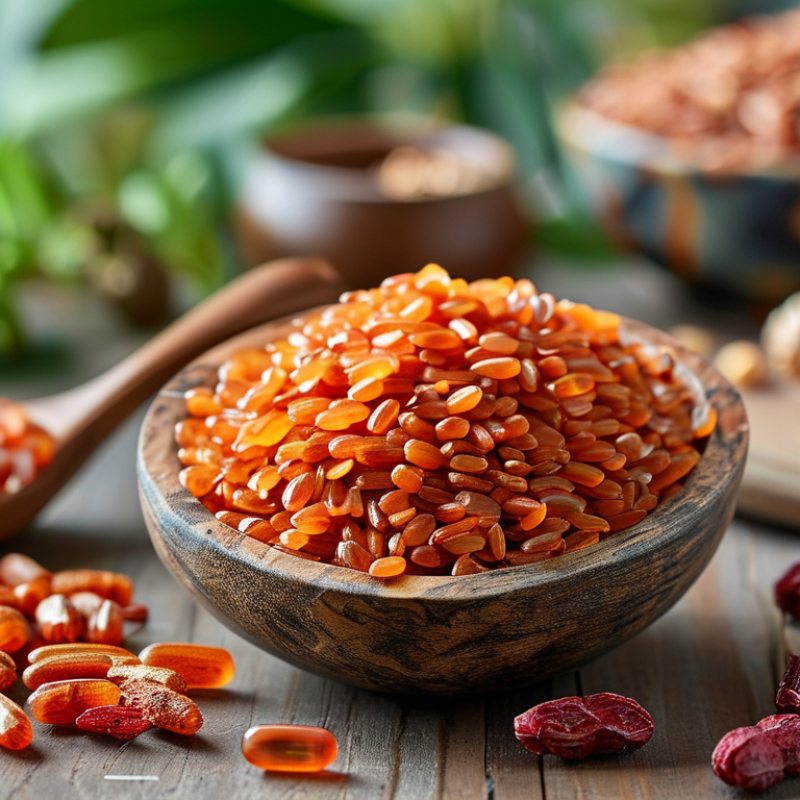
Red Yeast Rice Extract: Monacolin K, Citrinin, and Core Quality Metrics
Global buyers should treat red yeast rice extract as a controlled, test-driven ingredient. Monacolin K may support cholesterol management, but its concentration can vary sharply between batches. The EFSA 2018 scientific opinion reported serious muscle and liver concerns linked to red yeast rice monacolins. European rules now limit daily monacolins from these products to less than 3 mg. A certificate should show the exact monacolin K level, not only “standardized extract.”
Citrinin control is equally important. The European Commission set a maximum level of 100 micrograms per kilogram for citrinin in food supplements. Buyers should request HPLC or LC-MS testing, validated detection limits, and batch-specific results. Also review moisture, microbial counts, heavy metals, residual solvents, identity markers, and stability data. These metrics reveal handling problems that a bright red powder can hide. Supplier audits matter. Paperwork alone is not enough.
Tips: Ask for three recent batch reports. Compare monacolin K variation. Confirm citrinin testing by an independent laboratory. Check whether samples match commercial production. A small inconsistency deserves investigation. I would also request accelerated stability data, although it cannot replace real-time studies. Some specifications look impressive but remain incomplete. Procurement teams should document decisions and revisit them when regulations change.
Global Supplier Landscape: GMP Production Hubs and 2026 Capacity Signals
Global red yeast rice supply is concentrating around mature fermentation hubs in East Asia, with additional GMP capacity emerging in Southeast Asia and Europe. Grand View Research’s 2024 market assessment estimated continued growth through 2030, supported by demand for standardized nutraceutical ingredients. However, market growth does not prove dependable supply. Capacity is not quality.
For global buyers, the strongest 2026 signals are measurable. Suppliers should disclose fermenter volume, validated batch frequency, reserve capacity, and average lead times. The 2024 UN Comtrade database shows strong international trade under the broad HS 210690 category, although this code includes many unrelated preparations. Buyers should not treat those figures as red yeast rice capacity. That assumption needs testing.
GMP production hubs should provide batch-specific certificates, citrinin results, identity testing, and stability data. Monacolin profiles can shift with rice strain, fermentation temperature, and harvest timing. The European Food Safety Authority has also highlighted safety concerns involving monacolins from red yeast rice products. Therefore, serious suppliers need documented controls for both active compounds and contaminants. Site audits should examine cleaning records, microbial monitoring, change-control procedures, and laboratory competence. A large tank is only a signal. Consistent release data matters more.
2026 Best Red Yeast Rice Extract Suppliers for Global Buyers - Global Supplier Landscape: GMP Production Hubs and 2026 Capacity Signals
| Production / Supply Hub | Typical Supplier Profile | Relevant GMP or Quality Frameworks | 2026 Capacity Signal | Common Product Formats | Buyer Verification Priorities | Export and Regulatory Considerations |
|---|---|---|---|---|---|---|
| Eastern China Jiangsu, Zhejiang, Fujian and neighboring manufacturing clusters |
Large-scale fermentation and botanical-extract manufacturers supplying nutraceutical, food-ingredient and private-label markets | China food and health-food manufacturing requirements; many export-oriented facilities also maintain HACCP, ISO 22000, FSSC 22000 or customer-specific GMP systems | High Multiple fermentation lines and established export infrastructure; actual available capacity must be confirmed through current production schedules and audit records |
Fermented rice powder, standardized red yeast rice extract, monacolin-K-controlled extract, water-dispersible powder and encapsulation-grade material | Monacolin K assay method; citrinin by HPLC or LC-MS; full mycotoxin panel; microbial limits; heavy metals; pesticide residues; batch-to-batch color and activity consistency | Export documentation varies by destination. U.S. buyers must assess whether the product contains lovastatin-like compounds that may affect FDA regulatory status. |
| Central and Southern China Rice-producing areas with fermentation and grain-processing capacity |
Integrated grain, fermentation and ingredient processors; some facilities focus on bulk red yeast rice rather than highly standardized extracts | Food-safety management systems, HACCP-based controls and domestic manufacturing compliance; certification scope must be checked facility by facility | Medium to High Strong raw-material access, but extraction, purification and analytical capacity can differ substantially between facilities |
Whole fermented rice, powder, granules, low-monacolin extracts and food-coloring ingredients | Verify strain control, fermentation time, drying temperature, citrinin prevention, traceability of rice inputs and independent laboratory testing | Products intended for food coloring may not meet the same standardization requirements as nutraceutical extracts; product classification should be confirmed before import. |
| Japan Specialized fermented-food and functional-ingredient sector |
Smaller, quality-focused manufacturers and contract processors with emphasis on fermentation control, documentation and domestic functional-food applications | Japanese food-safety requirements, HACCP-based controls and customer-specific quality systems; pharmaceutical GMP claims require separate verification | Medium Generally associated with specialized rather than high-volume supply; lead times and minimum order quantities may be higher |
Fermented rice preparations, standardized powders, tablets and functional-food ingredients | Fermentation strain documentation, allergen controls, adverse-event procedures, monacolin K disclosure and stability data | Japanese market requirements do not automatically satisfy U.S. or European requirements; obtain destination-specific labels and regulatory statements. |
| United States Ingredient distributors, contract manufacturers and finished-product operators |
Importers and contract manufacturers sourcing fermented material internationally, then testing, blending, encapsulating or distributing domestically | FDA dietary-supplement current Good Manufacturing Practice requirements under 21 CFR Part 111; third-party certifications may include NSF, USP or other voluntary programs | Medium Domestic finishing and distribution capacity is broad, while primary fermentation is commonly sourced from Asia |
Capsules, tablets, softgels, premixes and standardized bulk extract | Supplier qualification, 21 CFR Part 111 records, identity testing, citrinin control, monacolin K declaration, certificates of analysis and complaint history | The FDA has stated that red yeast rice products containing more than trace amounts of lovastatin may not be marketed as dietary supplements without appropriate drug approval. Claims and labeling require regulatory review. |
| European Union Specialty ingredient importers, contract packers and regulated nutraceutical channels |
Importers and distributors purchasing tested extracts from Asia or other production regions, with local packaging and regulatory control | Food-safety management systems such as HACCP, ISO 22000 or FSSC 22000; pharmaceutical GMP applies only where the product and facility fall under medicinal-product rules | Medium Strong downstream compliance and packaging capability; supply depends heavily on qualified imported raw material |
Low-monacolin formulations, capsules, tablets, food supplements and blended botanical products | Confirm compliance with EU monacolin restrictions, warning statements, daily serving limits, citrinin limits, novel-food status where relevant and country-specific notification rules | Regulation (EU) 2022/860 restricts monacolins from red yeast rice in food supplements and requires specific warnings; the maximum recommended daily portion is limited to less than 3 mg of monacolins from red yeast rice. |
| India and South Asia Growing botanical-extract and contract-manufacturing base |
Botanical extract manufacturers, nutraceutical contract manufacturers and distributors; red yeast rice availability is generally more selective than in East Asia | FSSAI requirements for applicable products, HACCP, ISO systems and, for some facilities, pharmaceutical or nutraceutical GMP certifications | Emerging / Medium Potential for additional capacity, but dedicated red yeast rice fermentation scale and long-term supply records require close diligence |
Powders, capsules, tablets and blended cardiovascular-support formulas | Confirm whether fermentation is performed in-house or outsourced; audit raw-material origin, analytical laboratory competence, citrinin controls and continuity of supply | Import and labeling requirements vary by destination. Do not treat a general botanical-extract GMP certificate as proof of red yeast rice fermentation capability. |
| South Korea and Southeast Asia Fermented-food, nutraceutical and regional private-label markets |
Regional distributors, functional-food manufacturers and contract packers; some raw material is imported for local formulation | Local food-safety and health-functional-food rules, HACCP systems and facility-specific quality certifications | Emerging / Medium Good downstream formulation potential; primary fermentation capacity is less transparent than in established East Asian hubs |
Powder, capsules, tablets, sachets and functional-food blends | Check country-specific permitted claims, monacolin K limits, citrinin results, stability under humid storage and import documentation | A local health-functional-food approval or HACCP certificate does not necessarily establish suitability for export to the United States or European Union. |
Supplier Due Diligence: COA Testing for Monacolin K, Citrinin, and Microbes
For global buyers, red yeast rice extract supplier screening should begin with a lot-specific Certificate of Analysis (COA). A polished PDF is not proof. The COA should identify the batch, test date, laboratory, method, and sample size. For Monacolin K, request an HPLC result with the reporting limit and chromatogram. “Not detected” is incomplete without that limit. EFSA’s 2018 scientific opinion linked monacolins from red yeast rice with serious muscle and liver risks, even at relatively low intake levels. This makes accurate quantification essential.
Citrinin testing requires equal attention. Ask for a validated LC-MS/MS or equivalent method, not a generic “mycotoxin screen.” European food-safety rules set strict controls for citrinin in red yeast rice products, so buyers should compare results with the destination market’s current limits. Microbial testing should cover total aerobic count, yeast and mold, bile-tolerant Gram-negative bacteria, Salmonella, and Escherichia coli, using recognized methods such as ISO 4833-1, ISO 21527, or USP <61>/<62>. Small details matter.
Independent verification is stronger than supplier paperwork alone. Select random containers, seal retention samples, and send them to an ISO/IEC 17025-accredited laboratory. The AOAC International guidance on method validation emphasizes specificity, accuracy, precision, and matrix suitability. One weakness remains: a single passing batch cannot confirm long-term control. Review at least three consecutive lots, stability data, deviation records, and environmental monitoring. A supplier that resists raw chromatograms deserves closer scrutiny. Consistency is the real evidence.
EU Benchmarks: 3 mg Daily Monacolins and 100 µg/kg Citrinin Maximum
EU buyers are examining red yeast rice extract with tighter discipline in 2026. The key benchmark is a maximum of 3 mg daily monacolins from red yeast rice products. This figure applies to the recommended daily portion, not simply the extract’s laboratory concentration.
Suppliers should provide a clear specification for monacolin K and total monacolins. They should also explain the testing method, sample date, and batch number. HPLC results can help confirm the monacolin profile. Independent laboratory testing adds useful distance from supplier claims. A neat certificate is not enough.
Citrinin control is equally important. The EU benchmark sets a maximum of 100 µg/kg. Buyers should request batch-specific results from validated testing, such as LC-MS/MS. Storage conditions matter too. Heat, moisture, and long transport can complicate quality control. Check the sealed packaging, expiry date, and traceability records.
Small gaps deserve attention. Some documents report only monacolin K, while others report total monacolins. These figures are not interchangeable. A responsible supplier should clarify the difference before purchase. Regulatory wording may also change, so importers should verify current EU requirements with qualified specialists. This step feels slow, but it prevents expensive corrections after arrival.
2026 Buyer Comparison: MOQ, Lead Times, Certifications, and Total Cost
For global buyers, red yeast rice extract sourcing is less about the lowest quote and more about predictable supply. Grand View Research valued the global dietary supplements market at approximately USD 177.5 billion in 2023, increasing pressure on documented quality and delivery. In practical procurement, standard extract orders often begin around 100–500 kilograms. Custom specifications may require higher MOQs. Typical lead times range from four to ten weeks after artwork, testing, and deposit approval. That estimate can change quickly.
Certification claims need closer examination. WHO Good Manufacturing Practices, HACCP, ISO 22000, and current laboratory reports provide stronger evidence than a certificate alone. Ask for batch-specific COAs, identity testing, microbial results, heavy-metal limits, and active-compound analysis. Testing for citrinin is essential. The method and detection limit should be visible. A 2024 quality review of botanical supplements published in industry literature highlighted recurring gaps between label claims and analytical results. Not every supplier has the same control depth.
Compare total landed cost, not the factory price. Add testing, packaging, freight, insurance, customs handling, and rejected-batch risk. A 200-kilogram order with a lower unit price may cost more after air freight and repeated testing. Sea freight can reduce cost but extend delivery by several weeks. I would request three recent batch records and one retained-sample policy. Supplier comparisons remain imperfect. Exchange rates, harvest variation, and specification changes can distort the spreadsheet. A cautious buyer should score reliability separately from price.
Related Posts
-
Global Certification Requirements for Importing Organic Reishi Mushroom Powder into Your Market
-
Transform Your Mind: Discover the Benefits of Ginkgo Biloba Powder for Enhanced Cognitive Function
-
Ultimate Guide to Sourcing Natural Plant Extracts for Your Business Success
-
7 Insights on Why Apple Extract is Essential for Your Health and Wellbeing
-
Grape Seed Powder Surges in Demand Amidst US China Tariff Challenges
-
2026 Organic Ginger Extract Benefits and Uses for Global Buyers?