
Top Baby Food Pouch Suppliers for Global Buyers
Choosing reliable baby food pouch suppliers is a practical decision, not a simple price comparison. Global buyers must examine material safety, filling technology, print quality, and delivery performance. A dependable supplier should provide clear specifications, traceable production records, and test reports from recognized laboratories. These details matter when products may face heat, moisture, pressure, and long transport routes. A pouch that looks attractive in a sample room may fail after weeks in a humid warehouse.
This guide introduces suppliers serving different regions, order sizes, and packaging requirements. It considers factory experience, production capacity, quality controls, customization options, and communication reliability. Buyers can compare spout designs, barrier layers, zipper strength, sterilization suitability, and recyclable structures. Supplier audits and sample testing remain essential. No supplier is perfect. Some manufacturers offer excellent printing but limited technical support. Others provide strong compliance documents but require larger minimum orders. That trade-off deserves careful review.
Practical experience shows that small details often reveal production discipline. Check seal edges under light. Inspect cap threads by hand. Ask how rejected rolls are recorded. Request recent certificates, not generic brochures. This article aims to support informed sourcing decisions through realistic evaluation criteria and transparent comparisons. Requirements vary by market, product formula, and sales channel. Therefore, buyers should confirm current local packaging rules with qualified professionals before signing contracts. The right Baby food pouch supplier should support safety, consistency, and dependable growth, not merely deliver attractive packaging.
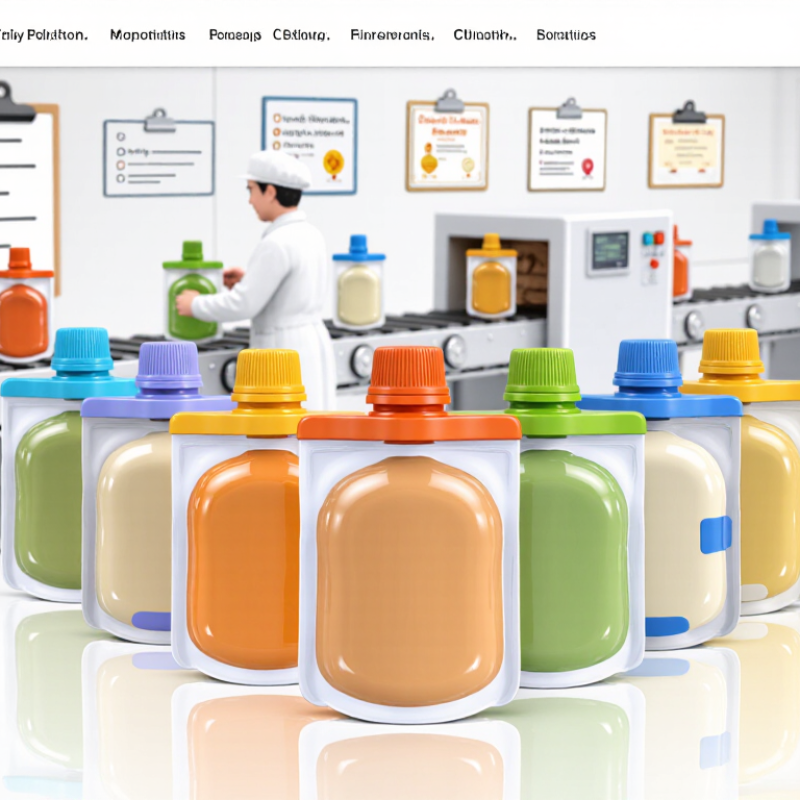
What Defines a Reliable Baby Food Pouch Supplier
Top Baby Food Pouch Suppliers for Global Buyers
What Defines a Reliable Baby Food Pouch Supplier
A reliable supplier shows quality through repeatable production, not attractive promises. Their pouches should use food-contact materials with stable barrier performance. This protects puree texture, flavor, and safety during storage and transport. Ask for seal-strength data, migration testing, and batch traceability records. Samples should survive filling, sterilization, stacking, and ordinary handling.
Production experience matters. Experienced teams understand spout alignment, film selection, filling temperatures, and closure performance. They can explain these details clearly. Strong suppliers also maintain documented quality systems and welcome independent factory audits. Their testing should cover leaks, pinholes, odor, print adhesion, and dimensional accuracy. Confirm that documentation matches the destination market’s packaging requirements.
Communication reveals reliability quickly. A dependable supplier provides realistic lead times, clear minimum order quantities, and written corrective-action procedures. They should report material changes before production, not after delivery. No factory is perfect. A small defect rate may still appear, especially during a new product launch. What matters is how openly the supplier investigates it and prevents repetition. Buyers should request a pilot order, inspect retained samples, and record pouch performance after transport. This practical step can expose weak seals, confusing lot codes, or inconsistent filling results before a large shipment is approved.
Key Product Types, Ingredients, and Packaging Options
Baby food pouches generally fall into fruit and vegetable purées, mixed meals, dairy-based blends, and grain or legume combinations.
Buyers should check texture, age suitability, and ingredient declarations, not just flavor.
The World Health Organization’s 2023 complementary-feeding guideline emphasizes dietary diversity for children aged 6–23 months.
That matters when assessing whether a product range offers more than sweet fruit blends. Simple ingredient lists help, but they do not by themselves prove nutritional balance.
Ingredients need practical scrutiny.
Ask suppliers for specifications covering allergens, added sugars, salt, and batch consistency.
For a vegetable purée, for example, confirm the vegetable percentage and whether water or starch changes its texture.
Details matter.
Packaging options include spouted stand-up pouches, flat sachets, and multilayer structures designed to limit oxygen and light exposure. Ask for barrier data, seal-integrity testing, and filling-process compatibility; appearance alone is weak evidence.
Packaging trade-offs deserve equal attention.
The OECD reported that only 9% of global plastic waste was recycled in 2019, in its 2022 Global Plastics Outlook.
Flexible pouches can reduce shipping weight, yet mixed-material layers may complicate recycling where suitable collection systems are absent.
No format is perfect.
Request material composition, shelf-life validation,
Essential Safety, Quality, and Compliance Standards
Global buyers should assess baby food pouch suppliers through documented safety systems, not attractive packaging. The World Health Organization estimates that contaminated food causes 600 million illnesses and 420,000 deaths each year. Infants face greater risks because their immune systems are still developing. Suppliers should therefore show HACCP controls, validated thermal processing, and batch-level traceability.
Material safety deserves equal attention. Pouch films, inks, adhesives, and spouts can contact food directly or indirectly. Request migration test results for the finished pouch, not only certificates from raw-material vendors. Seal-strength testing, leak detection, and accelerated shelf-life studies should reflect real transport conditions, including heat and humidity. Codex Alimentarius General Principles of Food Hygiene, updated in 2022, identifies preventive controls and verification as essential parts of food safety systems.
Supplier audits should also examine heavy metals, pesticide residues, allergens, microbiological hazards, and foreign-body controls. The FDA’s Closer to Zero action plan highlights the need to reduce exposure to lead, arsenic, mercury, and cadmium in foods consumed by children. Requirements differ across markets, so compliance teams should map each product against destination-country rules. A certificate alone is not enough. I would still ask for recent failed-batch records and corrective actions. That conversation can feel uncomfortable. It often reveals more than a polished audit score. Human review remains necessary, because digital traceability can document errors without preventing them.
How to Compare Suppliers, Pricing, and Minimum Orders
Top Baby Food Pouch Suppliers for Global Buyers
Comparing suppliers takes more than checking the price per pouch. Ask for a written quotation that separates product cost, packaging, sample fees, freight, and any testing charges. A low unit price may depend on a large order, which can be difficult for a new buyer to store or sell through. Request samples and compare pouch seals, spout fit, ingredient texture, and printed label clarity. Small details matter.
Minimum order quantities vary by recipe, pouch size, and custom packaging. Ask whether the supplier can offer a pilot run using standard packaging before you commit to custom printing. Confirm production lead times, payment terms, quality checks, and what happens if a batch fails inspection. Get these details in writing. A supplier’s answers should be specific, not just reassuring.
Tips: Compare at least three itemized quotes using the same pouch size and order volume. Ask how prices change at different quantities, and check whether shipping costs are estimates or confirmed rates. Keep notes from sample reviews; taste and texture can be subjective, and one test may not reveal every issue. A simple comparison sheet helps, though it cannot replace a factory audit or independent quality review.
Global Sourcing, Logistics, and Supplier Selection Steps
Global sourcing for baby food pouches starts with a clear product brief. Specify pouch capacity, material structure, spout position, cap type, and expected order volume. Ask suppliers to explain how they control incoming materials, production checks, and finished-goods inspection. Request recent audit information and relevant test reports, then confirm that documents match the exact pouch construction you plan to buy. A polished sample is useful. It is not proof of consistent production.
Logistics can change the real cost of a supplier. Compare production lead time, minimum order quantity, shipping options, and port-to-warehouse transit estimates. Ask how cartons are packed and protected from moisture or crushing. For printed packaging, approve a production sample before the full run; small color shifts can matter on a crowded shelf. Check who handles export paperwork and what import documents your destination requires. Confirm responsibilities in writing, because assumptions travel badly.
Supplier selection needs more than a low quotation. Compare response speed, technical answers, defect-handling procedures, and willingness to share corrective actions. A small trial order may reveal delays or communication gaps before a larger commitment. Track sample approval, production dates, inspection results, and shipment milestones in one shared record. Keep a backup supplier under review. That takes time. Still, a spreadsheet can look convincing while hiding weak evidence, so verify claims directly and revisit them when specifications change.
