How to Choose the Best CO2 Sensor for Your Needs?
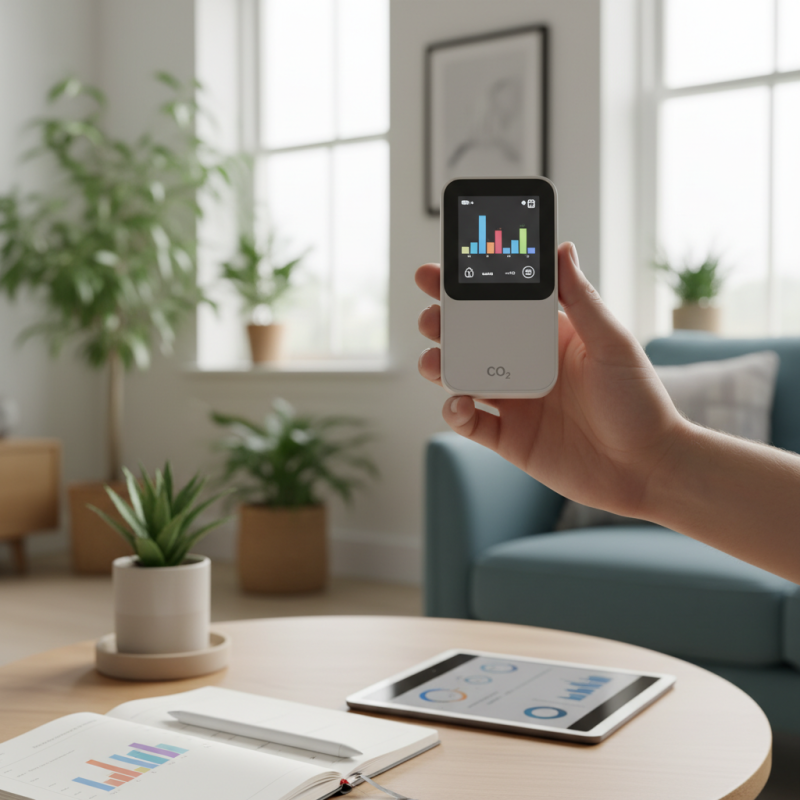
Choosing the right Co2 Sensor can feel overwhelming. Many options are available, each with various features. A CO2 sensor measures carbon dioxide levels, ensuring healthy indoor air quality.
Understanding your specific needs is crucial. Think about the size of the area you want to monitor. Some sensors work better in smaller spaces, while others are designed for larger environments. Features such as real-time monitoring and data logging can greatly enhance your experience.
Not all CO2 sensors are created equal. Reliability and accuracy should be your top priorities. Look for products backed by reputable brands. Reviews from actual users provide valuable insight into performance. Remember, investing in a solid CO2 sensor leads to improved health and comfort in your living spaces.
Understanding the Importance of CO2 Sensors in Various Environments
In many settings, CO2 sensors play a crucial role in maintaining safety and health. These devices monitor carbon dioxide levels, allowing effective ventilation and air quality management. Lack of proper ventilation can lead to health issues, including headaches and fatigue. In schools and offices, understanding CO2 levels ensures a productive environment.
Different environments require different sensor capabilities. For instance, industrial spaces may face fluctuating CO2 levels while residential areas might need constant monitoring. A suitable sensor is vital to meet specific needs. Sensors vary in response time and accuracy. Selecting the right one is essential and can be challenging.
Regular calibration is often necessary, as sensors can drift over time. Users may overlook this maintenance aspect, impacting reliability. It’s important to review the placement of the sensor, as location affects readings. Some users might install sensors too close to sources of CO2, leading to inaccurate data. An informed decision fosters better air quality management and overall well-being.
Identifying Your Specific CO2 Monitoring Needs and Requirements
Choosing the right CO2 sensor begins with understanding your specific monitoring requirements. Different environments demand unique solutions. For instance, residential settings prioritize indoor air quality, with studies showing that elevated CO2 levels can lead to decreased cognitive function. According to a report by the Environmental Protection Agency, 75% of homes exceed recommended CO2 levels at times.
In contrast, commercial spaces, like offices or warehouses, might need more advanced monitoring due to varying occupancy levels. The American Society of Heating, Refrigerating and Air-Conditioning Engineers (ASHRAE) recommends CO2 levels below 1000 parts per million (ppm) for optimal air quality. This data highlights the need for adaptable sensors that can adjust to fluctuating conditions.
Consider the placement and calibration of your CO2 sensor. A poorly placed sensor may not represent overall air quality accurately. Regular maintenance checks are essential to ensure reliable data. Some users report sensor inaccuracies after prolonged use, prompting a need for more rigorous testing and validation processes. Addressing these factors will help you find the most suitable CO2 monitoring solution for your environment.
CO2 Sensor Readings Over a Month
This bar chart represents the average CO2 levels recorded over a month, showcasing the variations in CO2 concentrations. Understanding these levels is crucial for determining the effectiveness of ventilation systems and indoor air quality management.
Evaluating Different Types of CO2 Sensors and Their Technologies
When selecting a CO2 sensor, understanding the technology behind different types is essential. There are primarily three types of CO2 sensors: infrared (IR), chemical, and solid-state sensors. Infrared sensors, widely used in industrial applications, rely on the absorption of infrared light. They are known for accuracy, with a reported sensitivity of up to 20 ppm. However, they require regular calibration.
Chemical sensors, often found in consumer applications, utilize a chemical reaction to detect CO2 levels. These sensors can be less accurate but are cheaper. However, their lifespan is typically shorter, often under five years, due to degradation. Solid-state sensors, while newer, offer promise with low power consumption. Their performance is improving, yet there are concerns regarding sensitivity and response time.
Choosing the right CO2 sensor also involves evaluating its intended use. For example, a greenhouse might need a sensor that is sensitive to minute changes in CO2 levels. Studies show that maintaining CO2 between 800-1200 ppm can optimize plant growth. Conversely, for indoor air quality, sensors must work reliably without false positives. The trade-off between cost and accuracy often leads to difficult choices, as not all sensors perform equally in diverse environments.
Key Features to Look for When Selecting a CO2 Sensor
When selecting a CO2 sensor, understanding its key features is essential. One critical aspect is sensitivity. A sensor should have a sensitivity range suitable for your application. According to a report from the Environmental Protection Agency, accurate readings between 400 to 2,000 parts per million (ppm) are vital for indoor air quality. Sensors that respond quickly to changes are preferred, especially in dynamic environments.
Another important feature is the response time. High-quality sensors typically offer response times under 60 seconds. This ensures you receive timely data about air quality. Furthermore, calibration is crucial. Regular calibration ensures consistent accuracy. Data from the Air Quality Sciences journal indicates that uncalibrated sensors can lead to significant measurement errors.
Consider the power source and maintenance needs, too. Battery-operated models provide flexibility, but might require frequent changes. Wired options can be more reliable, yet involve installation challenges. User-friendly interfaces can simplify monitoring. Features like digital displays enhance the user experience. Ultimately, weighing these features against your specific needs will lead you to the right solution.
Budget Considerations and Cost-Effectiveness of CO2 Sensors
When selecting a CO2 sensor, budget plays a crucial role. Prices can vary widely based on features and accuracy. Some basic models are inexpensive, but they may lack essential functions. Investing a bit more may yield a sensor with longer-lasting components and better precision.
Tips: Look beyond the price tag. Consider sensors that provide reliable data and have good customer reviews. Cheap options might save money upfront, but they could cost more in the long run due to frequent replacements.
Understanding the features you need helps in finding cost-effective options. Basic models may suffice for home use, while professional environments demand high accuracy. Always compare specifications and track records of longevity.
Tips: Evaluate maintenance costs. Some sensors require regular calibration or battery changes. This can add to your overall spending, so factor this into your budget. A sensor with lower maintenance can end up being more economical.