
top of page

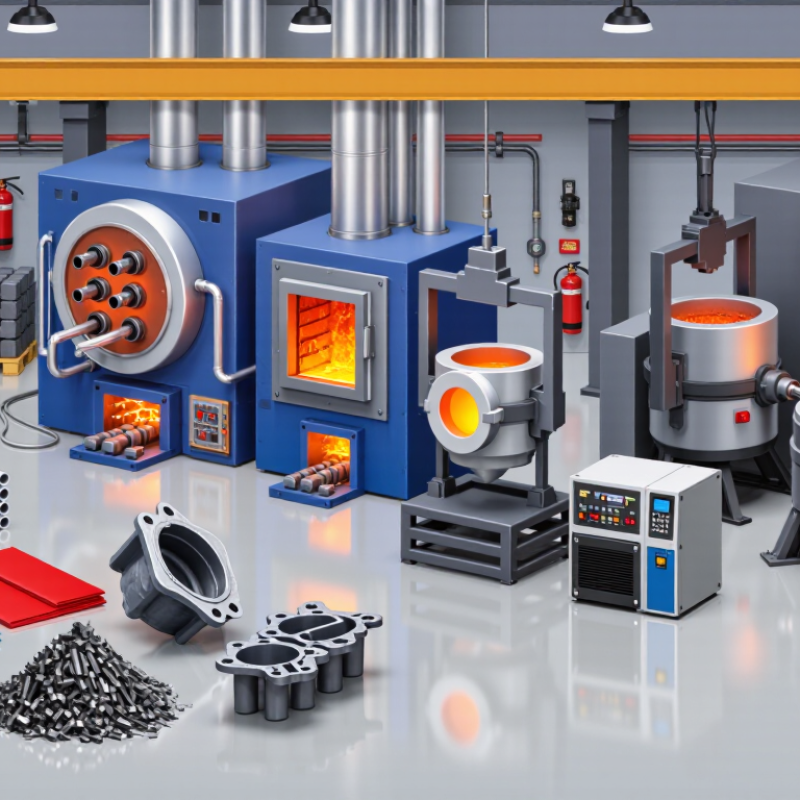
How to Choose an Aluminum Scrap Melting Furnace?

Choosing an aluminum scrap melting furnace is not simply a matter of selecting the largest model. The right furnace must match your scrap composition, production schedule, energy supply, and quality targets. Clean extrusion offcuts behave differently from painted sheets, castings, or oily turnings. These differences affect melting speed, metal recovery, dross formation, and maintenance requirements.

A practical evaluation begins with capacity. Estimate your hourly charge weight, batch size, and expected future demand. Then compare fuel-fired, electric, tilting, and rotary furnace designs. Each option offers advantages, but none performs perfectly in every workshop. Energy efficiency matters, yet poor charging practices can erase expected savings. A furnace with advanced controls may still disappoint if operators lack proper training. Small details matter, such as door sealing, burner adjustment, refractory thickness, and access for cleaning.

Safety and environmental performance should remain central to the decision. Ask suppliers for documented test results, operating temperatures, recovery data, and service records. Check whether the aluminum scrap melting furnace supports stable temperature control and safe removal of dross. Reliable suppliers explain limitations instead of promising unrealistic recovery rates. Their technical support, spare-parts availability, installation guidance, and warranty terms can influence total ownership cost more than the purchase price.

The calculation is rarely neat. Scrap prices change, energy costs fluctuate, and actual recovery depends on daily operating habits. A careful buyer should compare several furnaces under similar conditions and request references from comparable facilities. The best choice is not always the newest or most powerful machine. It is the furnace that delivers consistent metal quality, manageable operating costs, and dependable performance over time.
How to Choose an Aluminum Scrap Melting Furnace?

Define Scrap Grade by Aluminum’s 660.3°C Melting Point and Contamination Level

Choosing an aluminum scrap melting furnace starts with the scrap, not the furnace catalog. Pure aluminum melts at 660.3°C, but common alloys soften and melt across different temperature ranges. This figure is a reference point, not an operating target. Clean extrusion offcuts usually need less aggressive heating than painted panels, castings, or mixed shredded scrap.

Grade the material by alloy consistency, surface condition, and contamination level. Clean, dry wrought scrap can suit a crucible or tilting furnace with accurate temperature control.

Cast scrap may contain more silicon, iron, sand, and attached steel. Heavily coated or oily scrap produces more smoke, dross, and metal loss. Rotary or reverberatory designs may handle this burden better, especially at higher throughput.

Keep records.

In practical furnace trials, a temperature display can mislead. The chamber may read 700°C while the metal remains partly solid under an oxide crust. Use calibrated probes and inspect samples before tapping. Moisture is a serious risk; wet scrap can cause violent splashing when it contacts molten aluminum. Remove sealed sections, liquids, and loose contaminants before charging. I have also seen operators overheat mixed scrap to speed melting. It worked briefly, but oxidation increased and recovery fell. A slower charge, matched to scrap grade, often gives cleaner metal and steadier energy use.

Match Furnace Capacity to Throughput Targets from 0.2 to 5 Tonnes per Hour

How to Choose an Aluminum Scrap Melting Furnace?

Choosing an aluminum scrap melting furnace starts with throughput, not the largest advertised capacity. A target of 0.2 tonnes per hour needs a different operating rhythm from a five-tonne-per-hour line. Check whether the stated rate means charged scrap, melted metal, or tapped alloy. These figures are not interchangeable. A practical capacity review should include furnace cycle time, metal recovery, and daily operating hours.

For targets between 0.2 and 0.5 tonnes per hour, batch operation may offer better control and simpler charging. Production from 1 to 2 tonnes per hour usually requires faster loading, stronger temperature control, and reliable material flow.

At 3 to 5 tonnes per hour, the charging system becomes equally important. A large furnace cannot compensate for slow feeding. Light aluminum profiles also occupy more space than compact returns. That changes the cycle.

Keep some operating headroom. Many plants allow 10 to 20 percent for skimming, temperature checks, cleaning, and short interruptions. This is not wasted capacity. It protects alloy consistency. The first estimate is rarely perfect. A spreadsheet may ignore wet scrap, uneven charge density, or operator delays. Measure actual cycles during a trial run. Record charge weight, melt time, fuel or power use, and tapped metal weight. Those records provide a more reliable basis for selecting equipment across the 0.2 to 5 tonnes-per-hour range.

Compare Gas, Electric Resistance, and Induction Furnaces by Energy Use

Choosing an aluminum scrap melting furnace starts with energy use, not only purchase price. Gas furnaces can suit high-volume operations where fuel is affordable and heat demand stays steady. However, they lose energy through exhaust gases, furnace walls, and opening the door. Combustion also requires careful ventilation and temperature control. The actual efficiency may change with scrap size, loading habits, and furnace condition.

Electric resistance furnaces convert electricity into heat with relatively simple controls. They produce no combustion gases inside the melting area and can maintain stable temperatures for small or medium batches. Their energy cost depends heavily on local electricity rates. Induction furnaces heat the metal directly through electromagnetic energy. They often melt faster and reduce heat loss, especially when operators limit idle time. Still, they require suitable electrical capacity and disciplined charging practices. Efficiency figures look attractive on paper. Real performance can differ.

Tips: Weigh each batch and record kilowatt-hours or fuel use. Check melt time, metal loss, and standby consumption for several weeks. Keep scrap dry and remove enclosed materials before charging. Compare useful energy per kilogram, not only the furnace’s rated efficiency. A basic spreadsheet helps, but it can miss maintenance costs and production interruptions. My practical rule has exceptions: a highly efficient furnace may perform poorly when poorly loaded, frequently opened, or operated below its useful capacity.

Evaluate 90–98% Metal Recovery Through Fluxing, Dross Control, and Filtration

Choosing an aluminum scrap melting furnace requires more than checking capacity or fuel consumption.
The practical target is 90–98% metal recovery, but this range depends heavily on scrap cleanliness, alloy mix, and operating discipline. The International Aluminium Institute reports that recycled aluminum requires roughly 5% of the energy used for primary aluminum production. Recovery losses therefore affect both cost and environmental performance.

Fluxing supports this target by separating aluminum from oxide-rich dross. A suitable furnace should provide stable temperature control, strong mixing, and safe flux injection. Excessive flux can increase salt waste and trap valuable metal. Too little flux leaves aluminum in the dross.

The European Aluminium industry guidance emphasizes careful dross management because oxidation and handling losses can materially reduce recycling efficiency.
Keep skimming brief. Keep it consistent.

Dross control begins before melting. Dry, pre-sorted scrap reduces explosions, smoke, and oxide formation. After melting, a ceramic foam filter can capture non-metallic inclusions before casting. Filtration improves product quality, but it does not recover aluminum already lost in dross.

Operators should weigh incoming scrap, furnace charge, dross, recovered metal, and cast output. This mass balance reveals the real recovery rate. The 90–98% figure should be verified over several batches, not accepted from a brochure.
Results may disappoint. That is useful evidence.
References: International Aluminium Institute, Aluminium Recycling; European Aluminium, Aluminium Recycling in Europe.

Select Furnace Automation for Temperature Accuracy Within ±5°C and Safe Operation

How to Choose an Aluminum Scrap Melting Furnace?

Temperature control should lead the furnace selection. A practical target is accuracy within ±5°C across the melt, not only near the sensor. This matters when scrap composition changes during charging. A reliable system should combine calibrated thermocouples, multiple measuring points, automatic fuel adjustment, and recorded temperature trends. The International Aluminium Institute reports that recycled aluminum requires about 5% of the energy used for primary production. Better control can protect this advantage by reducing overheating, oxidation, and unnecessary holding time.

Safety depends on automation, not operator attention alone. Look for automatic shutoff during flame failure, abnormal pressure, sensor faults, or open furnace doors. Emergency stops should remain accessible beside the charging area. NFPA 86 guidance addresses safeguards for industrial furnaces, including combustion controls, ventilation, and interlocked operation. These features should be tested during commissioning, not merely listed in a quotation.

Small details reveal furnace quality. Ask whether sensors can be calibrated without long production delays. Check alarm histories on the control screen. Confirm that temperature accuracy is verified with an independent instrument. ±5°C sounds precise. It can still fail when one sensor measures the wall instead of the molten center. My own preference is conservative: choose redundant sensing and clear manual overrides, even when they increase the initial cost. Automation is helpful, but poor calibration remains a quiet weakness.

How to Choose an Aluminum Scrap Melting Furnace? - Select Furnace Automation for Temperature Accuracy Within ±5°C and Safe Operation

Selection Dimension Recommended Specification or Target Why It Matters for Aluminum Scrap Practical Evaluation Method
Furnace Type Choose a rotary, reverberatory, crucible, or induction furnace according to scrap form, throughput, and metal-quality requirements. Lightweight, coated, and mixed aluminum scrap can oxidize quickly and may require gentle melting, efficient skimming, and good dross control. Compare the furnace design with the actual scrap mix, including turnings, UBC, castings, extrusion scrap, and contaminated material.
Nominal Melting Capacity Select capacity based on the required hourly output, typical batch size, charging frequency, and available operating time. Oversized furnaces may waste energy during partial loads, while undersized furnaces can create production delays and excessive cycling. Calculate the required output using the target tons per hour, expected metal yield, melting cycle, and planned furnace utilization.
Temperature Accuracy Target automatic temperature control within ±5°C at the measurement point after stabilization. Stable temperature helps reduce overheating, oxidation, hydrogen pickup, refractory stress, and inconsistent casting quality. Request a demonstrated temperature trend under a representative load and verify the reading with a calibrated independent instrument.
Automatic Temperature Control Use closed-loop control with a programmable controller, proportional-integral-derivative logic, and automatic burner or power modulation. Automatic adjustment responds to charging and tapping disturbances more consistently than manual fuel or power changes. Check whether the system records setpoint, actual temperature, alarm status, output level, and operator actions.
Temperature Sensors Use correctly positioned, protected thermocouples or equivalent sensors, with periodic calibration and sensor-failure alarms. A sensor located only in the flame or furnace wall may not represent the actual molten aluminum temperature. Review sensor location, operating range, replacement procedure, calibration interval, and independent temperature checks.
Operating Temperature Range Provide a controlled operating range suitable for the alloy and process, commonly around 680–780°C for many aluminum melting applications. Aluminum melts at approximately 660°C, but excessive holding temperatures can increase oxidation and hydrogen absorption. Define separate melting, holding, and tapping setpoints for each alloy family and confirm them during commissioning.
Fuel or Power Efficiency Compare specific energy consumption in kWh or fuel units per ton of molten aluminum, including realistic scrap yield. Actual efficiency depends on scrap density, moisture, furnace loading, exhaust losses, insulation, and operating practice. Use a measured production trial rather than relying only on theoretical burner or electrical ratings.
Charging System Select a charging method that minimizes open-door time and safely handles the maximum scrap dimensions and load weight. Fast, controlled charging reduces heat loss and limits prolonged exposure of molten metal to air. Confirm charging clearance, interlocks, lifting limits, scrap size restrictions, and compatibility with existing handling equipment.
Safety Interlocks Include door, lid, burner, airflow, fuel-pressure, cooling-water, over-temperature, emergency-stop, and power-failure protections as applicable. Interlocks help prevent unsafe ignition, uncontrolled heating, molten-metal exposure, and equipment damage. Request a documented cause-and-effect matrix and test every protective shutdown during acceptance trials.
Moisture and Scrap Safety Provide clear procedures for drying, inspection, segregation, and controlled charging of wet or sealed scrap. Water or trapped liquids can vaporize rapidly when introduced to molten aluminum and create a serious splash or explosion hazard. Verify written operating procedures, operator training, scrap inspection points, and restricted-material controls.
Atmosphere and Combustion Control Use stable air-to-fuel or electrical power control and avoid unnecessary turbulence over the molten bath. Poor combustion or excessive turbulence can increase oxidation, dross formation, emissions, and metal loss. Review burner tuning, exhaust balance, flame supervision, and recorded combustion parameters.
Dross and Metal Recovery Choose a design that supports low-turbulence melting, accessible skimming, and repeatable dross handling. Reducing dross formation improves metal yield and lowers material handling and disposal costs. Measure charge weight, tapped metal weight, dross weight, and recovery percentage over several production cycles.
Data Logging and Alarms Include trend records, recipe management, alarm history, user access control, and exportable production data. Recorded data makes it easier to identify temperature drift, abnormal cycles, energy waste, and repeated safety events. Confirm data storage duration, sampling interval, backup method, reporting functions, and alarm acknowledgment records.
Furnace Lining and Maintenance Use refractory materials compatible with aluminum service and provide inspection access for lining, burners, sensors, and exhaust paths. Lining wear can increase heat loss, contaminate metal, create hot spots, and reduce safe operating life. Evaluate planned maintenance intervals, spare parts availability, repair procedures, and expected component life.
Acceptance Testing Require documented tests for temperature stability, capacity, energy use, alarms, interlocks, and repeatability before final approval. A controlled acceptance test confirms that the furnace performs under real operating conditions rather than only under no-load conditions. Set pass criteria in advance, including temperature accuracy of ±5°C, safety shutdown response, output rate, and recorded data quality.
  • LinkedIn Social Icon

© 2024 by LIPOND INTERNATIONAL INC. All rights reserved. Blog

bottom of page