
7 Tips for Choosing Livestock Medical Syringes
Choosing a Livestock Medical Syringe is a practical decision, not a simple purchasing task. The right device supports accurate dosing, cleaner handling, and less stress for cattle, sheep, goats, and other farm animals. A poor fit may waste medication, damage tissue, or slow treatment during a busy health check.
Dr. Temple Grandin, a leading animal-handling specialist, writes, “Animals are easier to handle when they are calm.” Her principle matters here. A comfortable grip, smooth plunger, and suitable needle can help handlers work with greater control. Yet equipment alone cannot solve every problem. Training, animal restraint, hygiene, and careful observation still shape the result.
This guide presents seven practical tips for selecting a Livestock Medical Syringe. It considers syringe capacity, material, needle compatibility, dose accuracy, cleaning, durability, and the animal’s size. A 20-milliliter syringe may suit one task, while a smaller syringe may offer better precision for another. The answer is not always obvious. Sometimes, convenience influences a choice more than clinical accuracy, and that deserves reflection.
Look closely at the details. Does the plunger move smoothly? Can the graduations be read in dim barn lighting? Will the barrel remain reliable after repeated cleaning? These small questions matter. Always follow the medicine label, veterinary instructions, and approved handling procedures. A dependable syringe supports good care, but it never replaces professional judgment.
Understanding Livestock Medical Syringe Types and Their Uses
7 Tips for Choosing Livestock Medical Syringes
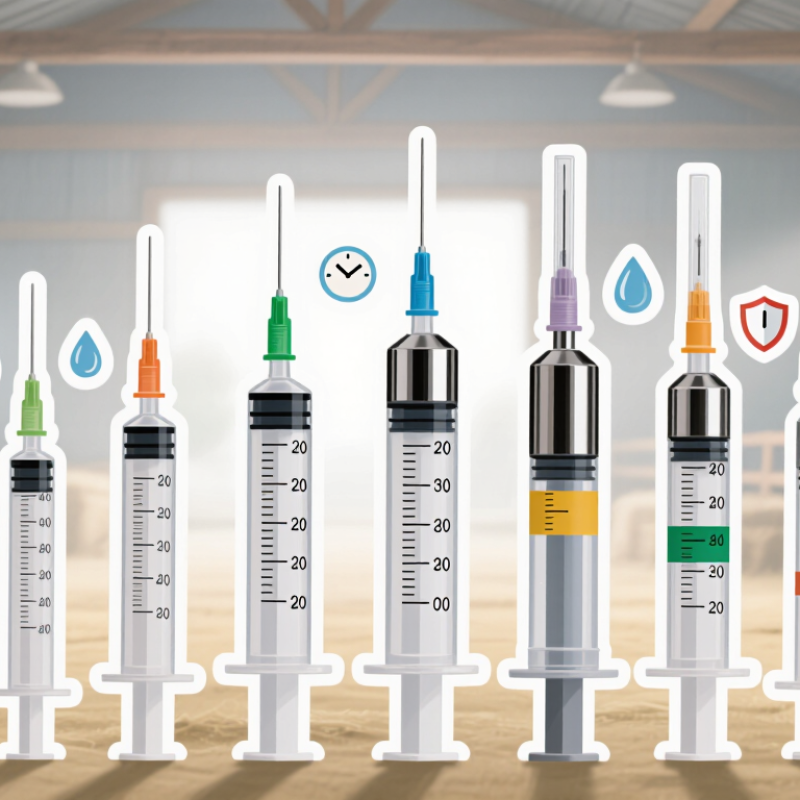
Understanding syringe types prevents dosing errors and reduces animal stress. Disposable plastic syringes suit single treatments and provide clear volume markings. Reusable metal syringes work well for repeated herd care, but they require thorough cleaning and inspection. Automatic syringes can speed up vaccination work, while oral drench guns deliver fluids through the mouth. Choose the tool for the treatment route, not only the animal’s size.
Tip 1: Match the syringe capacity to the prescribed dose. A smaller barrel often improves accuracy for tiny volumes.
Tip 2: Check the connection between syringe and needle. A secure luer-lock fitting can prevent leaks during movement.
Tip 3: Select needles by species, injection site, medication thickness, and veterinarian guidance. Thick fluids may need wider needles. Never guess.
For vaccines, use a clean syringe with easy-to-read markings and change needles as recommended. For oral products, use a drenching device designed to reduce choking risk. Inspect each barrel for cracks, cloudy plastic, or damaged seals. I sometimes recheck the markings under bright light; small lines can be surprisingly difficult to read outdoors. A common mistake is choosing a large syringe for convenience, then losing precision. Keep equipment clean, dry, and stored away from dust. Follow the product label and the attending veterinarian’s instructions for route, dose, and handling.
Matching Syringe Capacity and Needle Size to the Animal
7 Tips for Choosing Livestock Medical Syringes
Matching syringe capacity and needle size to the animal requires more than guessing by body size. The injection route, medication volume, and animal species all matter. A 3 mL syringe can offer better control for small doses, while a larger syringe may suit high-volume treatment. However, filling a large barrel with a tiny dose can reduce accuracy. I have seen this small mismatch cause avoidable dosing concerns.
Tip: Choose the smallest syringe that safely holds the prescribed volume. Check its measurement markings before drawing medication. For calves, sheep, or young goats, finer graduations often support more precise dosing. Adult cattle may require larger capacities, but split volumes only when veterinary instructions allow it. Never assume one syringe fits every animal.
Tip: Match needle gauge and length to the animal, injection site, and medication thickness. Thin, short needles may suit small animals and subcutaneous injections. Thicker fluids often need a wider needle, but excessive size can increase tissue damage. Intramuscular injections usually require different lengths than subcutaneous injections. Follow the medicine label and veterinary guidance carefully. Needle selection is not always obvious, especially with young or heavily muscled livestock.
Tip: Watch the animal’s movement and the syringe seal. A steady handler can improve safety and accuracy. Inspect the needle for bending or contamination, even when it looks clean. I sometimes prefer a slightly smaller syringe for control, but that choice can be wrong for thick medication. Recheck the prescribed dose, route, and equipment before every injection.
Choosing Safe, Durable, and Easy-to-Handle Materials
7 Tips for Choosing Livestock Medical Syringes
Choosing Safe, Durable, and Easy-to-Handle Materials
Material choice affects animal safety, dosing accuracy, and daily workflow. Look for medical-grade polypropylene barrels with clear markings and smooth plungers. These materials resist many common disinfectants and remain lightweight during long handling sessions. Stainless steel needles should feel rigid, not flexible. A bent needle can increase tissue damage and dosing errors.
WHO estimates that about 16 billion injections occur globally each year, although this figure covers human healthcare. It still highlights the importance of clean handling and reliable equipment. For livestock work, choose components that tolerate dust, moisture, temperature changes, and approved cleaning procedures. Check gasket compatibility with vaccines and medicines. Some rubber compounds swell or harden after repeated exposure. Small details matter.
Grip design deserves practical testing. A textured barrel can help when gloves are wet or cold. Large, readable graduations support accurate dosing, especially in poor light. The syringe should balance comfortably between two fingers. I would not select the strongest-looking model automatically; excessive stiffness can reduce control. FAO reports that livestock supports the livelihoods of at least 1.3 billion people, making dependable animal care equipment more than a convenience. Test one unit through a full workday before purchasing in quantity. That step is easy to overlook.
Checking Accuracy, Sterility, and Compatibility with Medications
7 Tips for Choosing Livestock Medical Syringes
Checking Accuracy, Sterility, and Compatibility with Medications
Choosing a livestock syringe starts with measurement accuracy, not convenience. Tip one: match the syringe capacity to the prescribed dose. Smaller barrels often make small volumes easier to read. Tip two: inspect the graduations under good light. They should be clear, evenly spaced, and easy to distinguish. Tip three: move the plunger gently before use. It should travel smoothly without sticking or leaking. Small errors matter.
Sterility deserves equal attention. Tip four: select sealed, sterile packaging and check its condition before opening. Do not use a syringe with torn wrapping, moisture, or damaged parts. Tip five: use a new sterile syringe whenever contamination could occur. A clean-looking syringe may still be unsuitable. Keep needles protected until needed. Follow the medication label and veterinary instructions carefully.
Compatibility is often overlooked. Tip six: confirm that the syringe materials suit the medication. Some solutions may react with certain plastics, seals, or lubricants. Ask a veterinarian or pharmacist when the label is unclear. Tip seven: check the connection type and needle fit before drawing medication. A loose connection can waste a dose. My checklist is useful, but it is not perfect. Recheck storage conditions, expiration dates, and the intended animal before administration. Good equipment reduces mistakes, yet careful handling remains essential.
7 Tips for Choosing Livestock Medical Syringes
Common nominal syringe capacities used in livestock care. Select the smallest capacity that safely accommodates the prescribed dose for better readability and control.
- Check measurement accuracy and clear graduation markings.
- Confirm sterile packaging and expiration information before use.
- Match the syringe material with the medication and disinfectant instructions.
- Choose a capacity that keeps the dose easy to read and measure.
- Verify needle attachment compatibility, such as luer-lock or fixed-needle designs.
- Select an appropriate needle gauge and length for the species, route, and injection site.
- Follow the veterinary product label for dosage, storage, handling, and disposal.
The capacities shown are common nominal sizes available for animal-health applications; actual availability, graduations, and accuracy specifications vary by product. Always follow the medication label and veterinary guidance.
Evaluating Cleaning, Maintenance, and Cost Before Purchase
When choosing livestock medical syringes, cleaning and maintenance deserve more attention than the purchase price. A low-cost syringe can become expensive if seals swell, plungers stick, or calibration drifts. Look for smooth barrels, clear measurement marks, and parts that separate without force.
Rinse promptly after use with approved water and cleaning solution. Inspect the tip, seal, and plunger. Residue can harden like a thin shell. For reusable equipment, follow veterinary guidance and the manufacturer’s cleaning instructions. Heat, chemicals, or rough brushes may damage components. Allow every part to dry fully before storage. Moisture trapped inside a barrel invites contamination. Store syringes in a clean, covered container, away from dust, sunlight, and feed areas.
Maintenance checks should be practical. Before a busy treatment day, test plunger movement and compare dose markings with a known volume. Replace cracked barrels, worn seals, cloudy markings, or loose fittings immediately. One missed defect can cause underdosing. Still, mistakes happen. Cost comparisons should include replacement seals, cleaning labor, storage, and expected service life. Disposable options may reduce washing time, but they can create higher recurring costs and more waste. Reusable models may save money over months, yet only when cleaning remains consistent. Ask a veterinarian or qualified livestock technician to review the syringe’s intended use, dose range, and maintenance demands. Small details matter.
7 Tips for Choosing Livestock Medical Syringes - Evaluating Cleaning, Maintenance, and Cost Before Purchase
| Tip | What to Evaluate | Practical Selection Guidance | Cleaning and Maintenance Check | Cost Consideration | Question Before Purchase |
|---|---|---|---|---|---|
| 1. Match the syringe capacity to the dose | Capacity and graduation size | Choose the smallest practical barrel that can hold the required dose. Common livestock capacities include 1, 3, 5, 10, 20, and 50 mL. Smaller barrels generally make low-volume measurements easier. | Check that graduations remain legible after repeated washing and that the plunger moves smoothly without sticking. | Buying several appropriate sizes may cost more initially but can reduce dosing errors and product waste. | Is the graduation interval suitable for the smallest dose routinely administered? |
| 2. Verify measurement accuracy and dose control | Barrel markings, plunger seal, and adjustment mechanism | Look for clear, permanent markings and a seal that delivers consistent volume. For repeated dosing, a locking dose adjuster or adjustable delivery system can improve consistency. | Inspect the seal regularly for swelling, cracking, leakage, or loss of flexibility. Replace worn seals rather than compensating by changing the dose setting. | A more durable seal may increase purchase price but lower the cost of inaccurate dosing and early replacement. | Can the syringe maintain repeatable delivery after routine cleaning and extended use? |
| 3. Select materials compatible with the medication | Barrel, plunger, gasket, and needle materials | Use materials specified as compatible with the intended vaccines, antibiotics, antiparasitics, or other veterinary medicines. Stainless-steel needles are commonly selected for strength and corrosion resistance. | Check whether medication residue can be removed without damaging plastic components, seals, or transparent measurement surfaces. | Material compatibility helps prevent leakage, discoloration, swelling, and premature replacement. | Are all wetted components approved for the medicines and disinfectants used on the farm? |
| 4. Prioritize easy disassembly and cleaning | Number of parts, internal surfaces, and access points | Prefer a design that can be separated without special tools and has few crevices where medicine, dirt, or biological material can collect. | After use, follow the applicable veterinary instructions: empty the syringe, rinse promptly, wash with a suitable detergent, rinse thoroughly, dry completely, and store in a clean protected area. | Simple cleaning can reduce labor time, water use, and the risk of replacing parts damaged by aggressive cleaning. | Can every fluid-contact part be removed, inspected, washed, and dried thoroughly? |
| 5. Confirm sterilization and disinfection requirements | Heat tolerance and approved sanitation method | Do not assume that a reusable syringe is suitable for boiling, steam sterilization, chemical disinfection, or autoclaving. Follow the product instructions and the medicine label. | Record the recommended cleaning method, maximum temperature, chemical restrictions, and drying procedure before putting the syringe into service. | A syringe that requires specialized sanitation may create additional equipment, labor, and replacement costs. | Which sanitation methods are explicitly approved, and which could damage the syringe? |
| 6. Assess maintenance and replacement parts | Seal, spring, tubing, needle, and barrel availability | Choose a design with replaceable wear parts when the expected workload is high. Keep spare seals, compatible needles, and other recommended components available. | Inspect before each use for cracks, bent needles, loose fittings, blocked pathways, leakage, and abnormal plunger resistance. | Compare the price and service life of replacement parts, not only the initial syringe price. | Are replacement parts available separately, and can routine servicing be completed on-site? |
| 7. Calculate total cost of ownership and safe usability | Purchase price, consumables, labor, durability, and handling | Compare the expected cost per treatment cycle: syringe price, needles or tubing, replacement seals, cleaning time, calibration checks, downtime, and disposal requirements. | Select ergonomic grips, smooth controls, secure needle connections, and easy-to-read markings to support safe handling and reduce accidental spills or needlestick injuries. | A lower purchase price may be outweighed by frequent seal replacement, difficult cleaning, inaccurate dosing, or short service life. | What is the estimated cost per use over the planned service period, including maintenance and consumables? |
Note: Cleaning, disinfection, reuse, needle selection, and disposal should follow the applicable veterinary instructions, medication label, farm biosecurity plan, and local regulations.
